Nitin Gadkari Says No Challans for Speeds Up to 120 KMH on Expressways
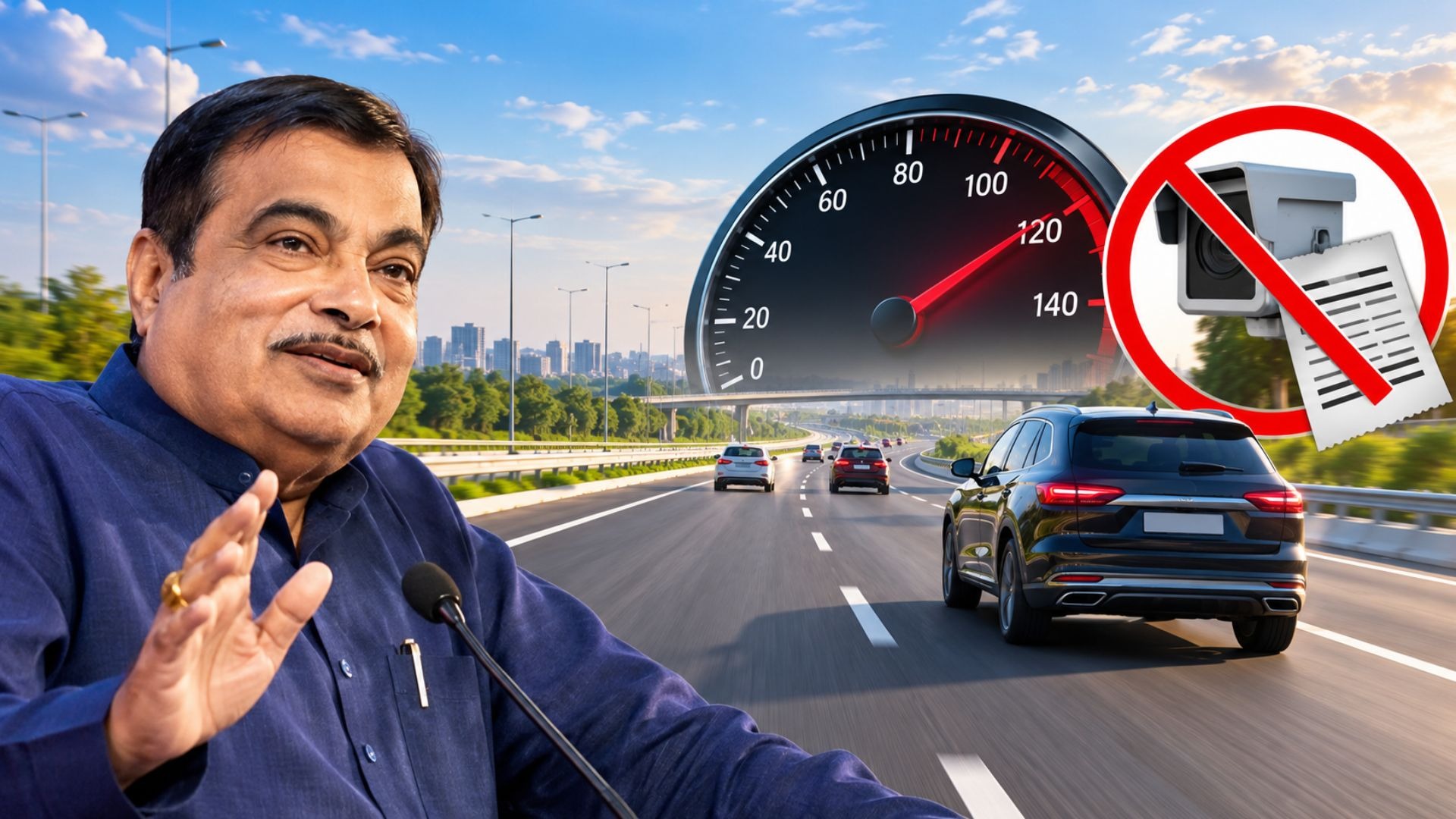
Nitin Gadkari says no speeding challans up to 120 kmph on expressways and suggests a 20% margin before penalties are imposed.
Nitin Gadkari Suggests 20% Speeding Leeway on Expressways
Union Road Transport and Highways Minister Nitin Gadkari has said motorists should not receive speeding challans for driving at speeds of up to 120 kmph on expressways. He has also suggested allowing an additional 20% margin beyond this threshold before issuing penalties.
Speaking at a Confederation of Indian Industry (CII) event focused on the future of India's highways, Gadkari said he had instructed officials not to send speeding notices to motorists travelling within the specified limit.
He added that vehicles exceeding 120 kmph by up to 20% should also be given leeway, while challans should be issued for speeds beyond that margin.
What Does the 20% Speeding Margin Mean?
On an expressway with a prescribed speed limit of 120 kmph, a 20% margin would take the threshold to 144 kmph. This means motorists could potentially avoid a speeding challan for travelling at speeds up to 144 kmph, subject to the implementation of the minister's instructions.
However, the proposed margin should not be interpreted as a formal increase in the legal speed limit. The prescribed speed limit remains applicable, and limits can vary depending on the road and vehicle category.
Motorists should also note that the 120 kmph threshold does not apply to every highway or expressway. Roads with lower speed limits will continue to have their respective restrictions.
The extent to which these instructions will be reflected in automated speed-monitoring and challan systems also remains unclear. Until the enforcement guidelines are formally clarified, motorists should continue to follow the speed limits displayed on road signs.
Gadkari Calls for AI-Based Highway Monitoring
Alongside the speeding enforcement remarks, Gadkari called on the industry to support the development and implementation of an AI-based Advanced Traffic Management System (ATMS).
The proposed system is aimed at improving highway monitoring and strengthening enforcement of traffic violations, including lane-discipline offences. Technology-based monitoring is expected to play a greater role as India continues to expand its expressway network.
Gadkari's remarks suggest a possible relaxation in the way speeding violations are enforced on expressways. However, the actual impact will depend on the formal guidelines issued and their implementation across traffic monitoring and challan systems.