BMW, Mercedes Imports May Jump Sixfold After India-EU Deal
India-EU FTA could raise European car imports nearly sixfold, with lower tariffs on select ICE, hybrid and EV models under phased quotas.
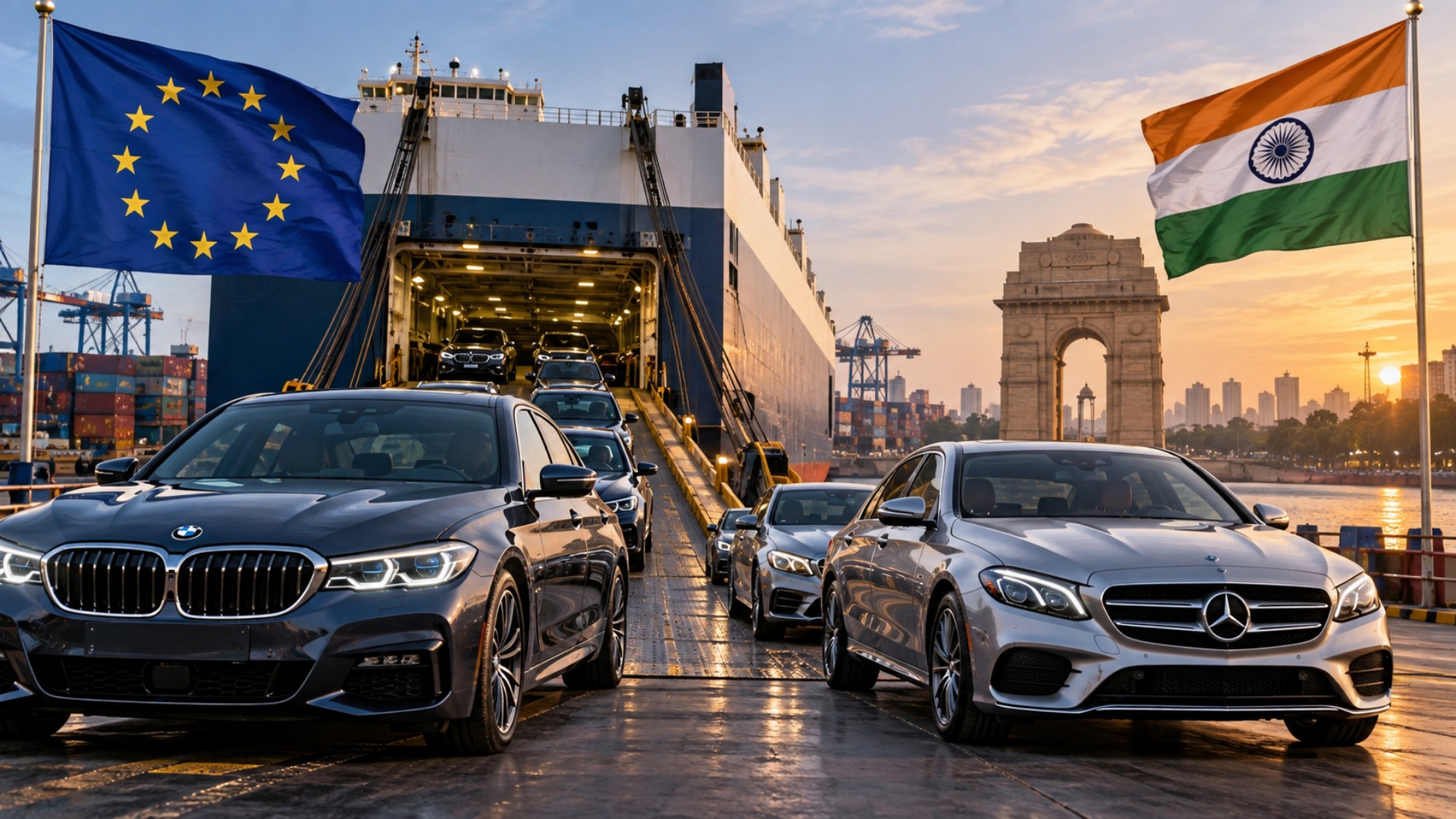
India and the European Union's proposed free trade agreement (FTA) could significantly increase automobile imports from Europe, with India agreeing to allow a first-year tariff-rate quota (TRQ) of 100,000 completely built-up internal-combustion engine and non-plug-in hybrid cars.
The proposed quota is nearly six times the number of cars India imported from the EU in 2025. According to the draft agreement released by the European Union, India imported 17,191 cars from the bloc last year.
The quota will gradually increase to 160,000 vehicles by the 10th year of the agreement. However, the tariff concessions will apply only to vehicles priced above €15,000, while cars below this threshold will receive no concession.
Tariffs On Imported Cars To Fall
Under the proposed agreement, vehicles priced between €15,000 and €35,000 will see the in-quota import duty fall from the current 110% to 35% in the first year. The tariff is scheduled to decline further to 10% by the fifth year after the agreement comes into effect.
For vehicles priced above €35,000, the duty would fall from 66% to 30% in the first year before reaching 10% over the same period.
The quota will also be divided across different vehicle price categories. From the fifth year, 43,000 units will be reserved for cars priced above €50,000.
The proposed changes could benefit European luxury carmakers operating in India, including BMW, Mercedes-Benz and Audi, by making it possible to import more vehicles at significantly lower tariff rates.
No Tariff Concession For Cars Below €15,000
The agreement includes safeguards for India's domestic automobile industry. Cars priced below €15,000 will not receive preferential tariff treatment under the proposed deal.
The structure is intended to limit the impact of lower import duties on the mass-market segment, where Indian manufacturers and suppliers have a stronger presence.
Trade think tank Global Trade Research Initiative (GTRI) said the EU would become the second major trade partner after the UK to secure automotive tariff concessions from India through an FTA.
GTRI also said the agreement could set a precedent for other major trading partners, including Japan and South Korea, to seek similar preferential access to India's automobile market.
EV Imports To Get Concessions From Fifth Year
The proposed FTA also includes tariff concessions for electric vehicles, plug-in hybrids and other eligible vehicle technologies. However, these concessions would begin only from the fifth year of the agreement.
The benefits would apply to vehicles priced at €20,000 or more. The CBU quota for these vehicles would start at 20,000 units in the fifth year, increase to 50,000 units by the 10th year and reach 90,000 units from the 14th year onward.
Electric vehicles and other eligible cars priced below €20,000 would not receive preferential tariff concessions.
India Secures 1.64 Million-Tonne Steel Quota
The proposed FTA also provides India with a total steel export quota of 1.64 million tonnes across 16 categories for shipments to the European Union.
The quota includes products such as metallic coated sheets and stainless hot-rolled quarto plates. It is divided into two components: 0.69 million tonnes under the FTA and 0.95 million tonnes under the most-favoured-nation (MFN) component, which is available to all eligible trading partners.
As a result, only the 0.69-million-tonne FTA component is specifically assured for India, while Indian exporters will have to compete with suppliers from other countries for the remaining quota.
The provisions come amid concerns over Europe's measures to protect its steel industry from global overcapacity, including the EU's Steel Overcapacity Regulation, which came into force on July 1.
The regulation provides duty-free quotas of 18.3 million tonnes, while imports above the quota face a 50% duty.
Higher-Value Steel Products Could Gain Importance
According to a note by the Indian Council for Research on International Economic Relations (ICRIER), increasing exports of higher-value-added steel products could help Indian producers reduce their exposure to the Carbon Border Adjustment Mechanism (CBAM) and improve their competitiveness in the European market.
The think tank also recommended stronger industrial support, including research and development funding, clean-technology access, concessional financing and investment guarantees to help smaller manufacturers manage the additional compliance costs.
EU-India FTA Moves Closer To Conclusion
The European Commission has forwarded its proposal for the conclusion of the India-EU Free Trade Agreement to the European Council, indicating that the deal is moving towards the final approval stage.
The European Union said the agreement, once authorised, adopted and brought into force, would improve market access, reduce tariffs and address trade barriers while providing greater predictability for trade and investment between the two markets.
For India's automobile industry, the proposed tariff concessions could open the door to a substantial increase in European vehicle imports over the coming years, while the phased structure and price thresholds are designed to provide some protection to domestic manufacturers.