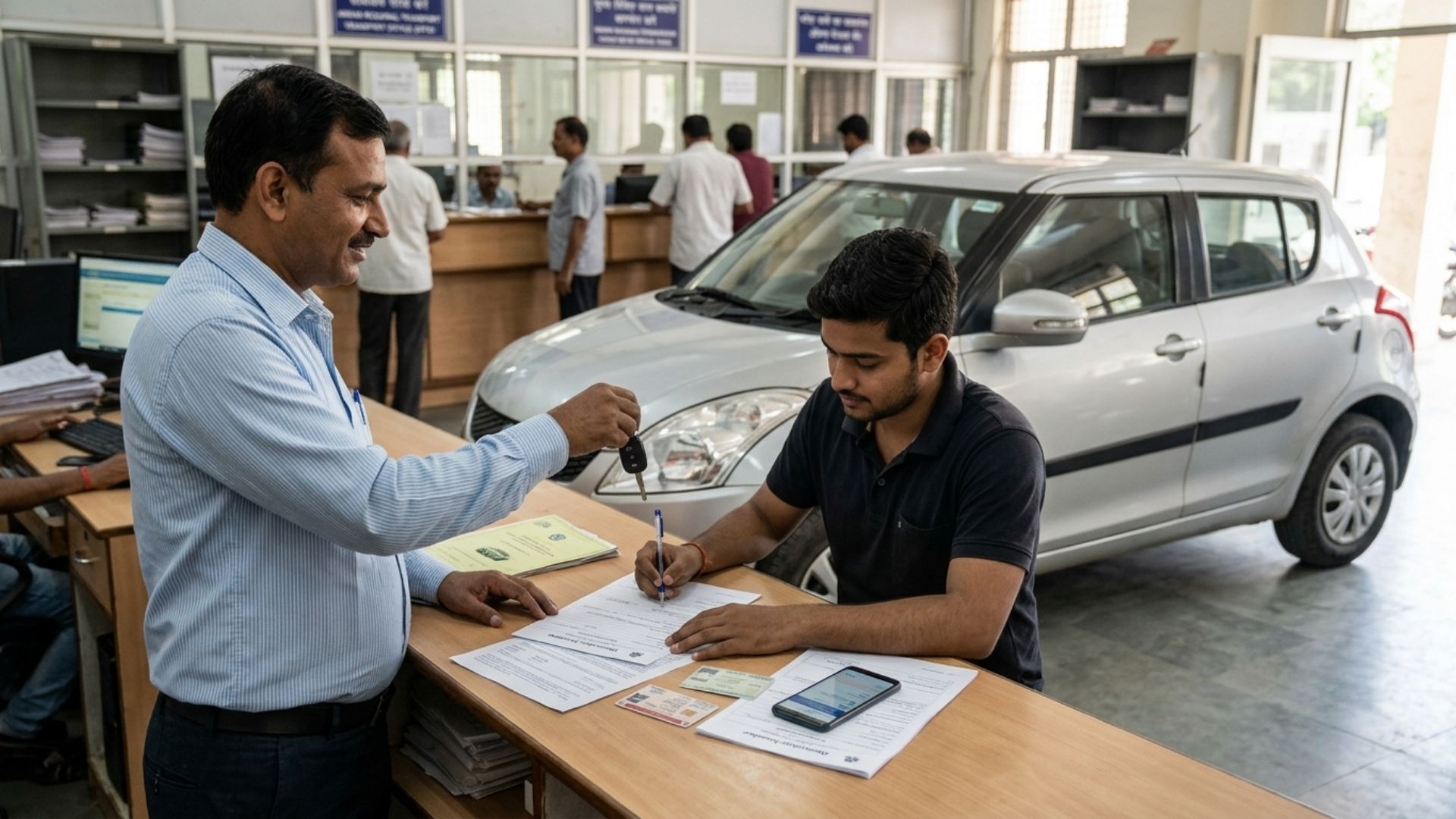

Car ownership transfer in India is an important legal step when a used car is sold, gifted, or otherwise transferred to another person. Simply handing over the keys and receiving payment does not make the buyer the registered owner. The vehicle's Registration Certificate (RC) must also be updated with the new owner's details.
The process can be done through the VAHAN portal and, if needed, the concerned Regional Transport Office (RTO). Knowing what documents to prepare and when to submit them can help both buyer and seller avoid unnecessary delays.
Quick Summary
- Usually, the transfer is initiated by the seller on Form 29, and the ownership application is made by the buyer on Form 30.
- For vehicles registered in the same state, the buyer must apply within 14 days of transfer.
- The application period for an inter-state transfer is normally 45 days, and you may need to provide additional documentation.
- Required documents include a valid RC, insurance, and PUC papers.
- RTO transfer charges on vehicle ownership are based on the vehicle class and the state rules applicable.
What Is the Car RC Transfer Process?
The RC transfer process in a car makes the buyer the registered owner of the vehicle. It is important because future matters like taxation, insurance records, notices, and other official communications can be linked to the registered owner.
Step 1: Complete the Sale
The buyer and seller must sign the sale agreement and ensure that the basic records of the vehicle are in order. Before proceeding, ensure the registration details, insurance validity, and PUC certificate are in order.
Step 2: Submit Form 29 and Form 30
The transfer notice required is furnished by the seller in Form 29. The buyer then applies for transfer of ownership in Form 30. The transfer application is initiated by the seller online as per existing VAHAN instructions, before the buyer proceeds with the next steps.
Step 3: Upload Documents and Pay the Fee
Applicants can fill in the required details on VAHAN, enter insurance details, upload supporting documents, and pay the applicable fee online. Depending on the transaction and the state, an appointment or RTO visit may also be required.
Step 4: Track the Application
Keep the application number and payment receipt after submission. You can check the application status on the VAHAN services portal.

Car Ownership Transfer Documents You Should Prepare
The specific requirements can vary from state to state and transaction to transaction, but typical car ownership transfer documents include:
- Form 29
- Form 30
- Original Registration Certificate
- Valid motor insurance certificate
- Valid Pollution Under Control (PUC) certificate
- PAN card or applicable Form 60
- Proof of address
- Purchaser's photograph and other supporting documents where required
- NOC or related documents for certain inter-state transfers
Some of the supporting documents marked as conditional are only required by particular states, as per Parivahan.
What Are the RTO Transfer Fees for Car Ownership?
The RTO transfer fees for vehicles are mentioned in the respective motor vehicle rules, and they may vary as per vehicle category and state-level requirements.
According to Rule 81 of the Central Motor Vehicles Rules, the fee for transfer of ownership is generally 50% of the registration fee applicable to that category of vehicle. Additional charges may apply in certain circumstances, such as smart card fees or state specific requirements.
Hence, it is advisable to check the fee mentioned on the VAHAN portal for your respective vehicle before making payment.
RTO Ownership Transfer Process: Same-State vs Inter-State
The RTO ownership transfer process differs slightly depending on where the vehicle is registered.
These timelines and document requirements are based on Parivahan's current guidance.
Also read:- Car Buying Guide 2026: Choose the Right Car for Your Budget
Common Mistakes to Avoid
Don’t see the RC transfer as an optional formality. Both parties shall retain copies of the sale documents, submitted forms and the payment receipt. Also verify whether the vehicle has any active loan or hypothecation. If financing is shown on the RC, additional financier related documents or consent may be required.
If you want to transfer your vehicle to another state permanently, first check the NOC requirements in case of inter-state transfer. AutoRaftar can also help car buyers and sellers stay updated on the various processes related to a vehicle, ownership aspects and other practical car information.
Conclusion
The proper method to safeguard both the buyer and seller and ensure the RC has the correct registered owner is to complete the car ownership transfer in India. Collect the required documents, complete Form 29 and Form 30, pay the relevant fee, and monitor the application through the official VAHAN portal.
Before beginning the transfer of car ownership in India, always ensure you are aware of the latest requirements applicable to your state and vehicle. AutoRaftar provides useful car-related information and makes every step of the ownership journey easy.
FAQs about Car Ownership Transfer in India
1. What documents are required for car ownership transfer in India?
Common documents include Form 29, Form 30, the original RC, valid insurance, PUC certificate, proof of address, and PAN or Form 60, although requirements can vary by state.
2. How long does car ownership transfer take in India?
The application should generally be submitted within 14 days for a same-state transfer and within 45 days for an inter-state transfer. Processing time after submission can vary by RTO and transaction.
3. Can I transfer car ownership online?
Yes. VAHAN provides online services for transfer of ownership, including entering details, uploading documents, and making the required payment. Some applications may still require RTO verification or an appointment.
4. Who initiates the car RC transfer process?
Under the current VAHAN workflow, the seller initiates the transfer-of-ownership application, after which the buyer proceeds with the required steps.