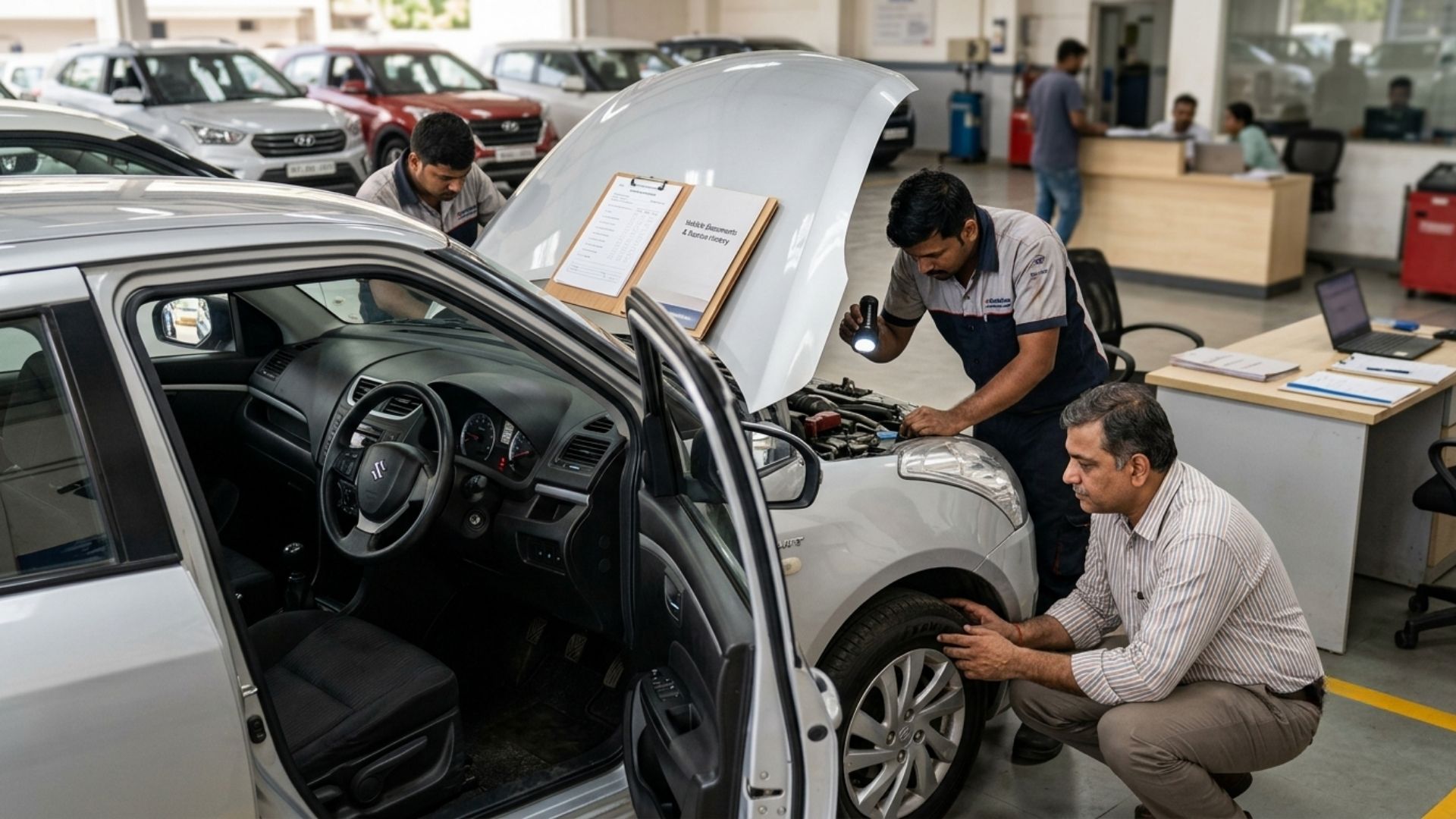

Buying a pre-owned vehicle can offer excellent value, but only if you know what to look for. A clear used car buying checklist in India will help you to check the condition of the car, verify its history, and avoid unexpected costs post-purchase. A few careful checks, from checking the engine and tyres to reviewing documents and service records, can make your decision much more confident.
Whether you are buying from a private seller or looking through online listings, go through these 15 checks before paying any booking amount or finalising the deal.
Quick Summary
- Check for any signs of damage or neglect on the outside, tyres, and lights, and also inside.
- Test drive the car thoroughly and listen for any weird sounds.
- Verify registration, insurance, pollution certificate, and ownership papers.
- Check service records, previous repairs, and accident history.
- Assess the condition and history of the car against the asking price.
What is the Used Car Buying Checklist in India?
A used car buying checklist in India is a detailed guide to evaluate a second-hand vehicle before buying. It includes the physical condition of the car, the mechanical parts, the documents, the ownership history, service records, and how it performs on a test drive.
Here are the 15 essential checks:
1. Check the exterior condition
Check for dents, scratches, mismatched paint, and uneven panel gaps. Variations in the shades from panel to panel may indicate previous accident repair.
2. Inspect the tyres
Check tread depth, uneven wear, and tyre age. Unevenly worn tyres can sometimes point to alignment or suspension problems.
3. Examine the lights and glass
Test the headlights, indicators, brake lights, and fog lamps. Check the windscreen and windows for cracks or chips.
4. Look inside the cabin
Inspect the seats, dashboard, carpets, seat belts, and door trims. Excessive wear compared with the claimed mileage deserves closer attention.
5. Check the engine bay
Look for oil leaks, coolant residue, damaged wiring, and excessive corrosion. The engine should start smoothly without unusual smoke.
6. Assess the engine and transmission
During the test drive, check acceleration, gear changes, clutch operation, and braking. Any significant jerking, slipping, or knocking should be investigated.
7. Test the suspension and steering
Drive over a few uneven surfaces carefully. Listen for knocking sounds and check whether the steering feels stable and responsive.
8. Test the brakes
The car should brake smoothly without excessive vibration, pulling to one side or unusual sounds.
9. Check the air conditioning and electronics
Test the air conditioning, power windows, central locking, infotainment system, reverse camera, and other electrical features.
10. Verify the mileage
Compare the odometer reading with the service records and the overall condition of the car. If a very worn vehicle shows a very low reading, this should be verified further.
11. Check for accident or flood damage
Look for signs of repair or moisture in the boot, spare wheel area, underbody, and carpets. Directly enquire about previous accidents or major repairs.
12. Take a proper test drive
You should test drive in city traffic, on good roads, and, if possible, on a faster road. Check for starting, acceleration, braking, steering, and strange noises.
13. Verify ownership details
Check the details of the seller with the registration certificate and make sure the ownership details match.
14. Review the vehicle documents
The used car documents checklist in India should include the registration certificate, valid insurance, pollution certificate, and any service or repair records available. Also check if any loan or hypothecation details are left.
15. Review the service history
A consistent service history can reveal how regularly the vehicle was maintained and whether major components have already been replaced or repaired.
How do I Inspect a Second-Hand Car Before Buying It?
Begin with a visual check in daylight, preferably with the engine cold. Instead of just taking a quick look, work your way around the car using this used car inspection checklist.
If you are not confident in mechanical checks, then consider getting an independent inspection before you complete the purchase. A professional can spot things that might not be obvious on a quick test drive.
Practical Information Table
What Documents Should I Check When Buying a Second-Hand Car?
Your used car documents checklist in India should include:
- Registration Certificate (RC)
- Valid motor insurance
- Pollution Under Control (PUC) certificate
- Service and maintenance records
- Loan or hypothecation status, where applicable
- Records relating to major repairs or insurance claims, where available
Make sure the registration and ownership details match the vehicle and seller information. Do not overlook paperwork simply because the car appears to be in good condition.
Also read:- Best Used Cars Under ₹5 Lakh in India 2026
How Do I Check the Service History of a Used Car?
Ask the seller to show you the invoices, service book entries, and records from authorised workshops or reputable garages. Check that servicing has been done at reasonable intervals and look for any evidence of major work, such as clutch, brakes, tyres, battery, or timing-related replacements.
The service history should also broadly support the mileage. Missing records do not automatically mean the car is unsuitable, but they should make you more cautious.
Second-Hand Car Buying Tips Before You Pay
The best tips for buying a second-hand car are simple. Don't rush into anything, compare similar vehicles, and if you can, inspect the car yourself. Don’t settle for a low price.
And work out the likely cost of ownership too. Expenses such as tyres, battery, servicing, insurance renewal, or repairs that need to be done soon can drastically change the real value of what looks like an inexpensive car.
For more options, you can explore used car listings on AutoRaftar and compare vehicles based on your requirements before making a decision.
Conclusion
A good inspection can remove a lot of stress from buying a used car. This used car buying checklist in India covers the key areas from bodywork and mechanical condition to documents, ownership, and service history. Take your time, check the information you have been given by the seller, and get it professionally inspected if necessary. A few more checks before you buy can help you find a reliable used car and avoid expensive surprises down the road.
FAQs About Buying Used Cars
1. What should I check first when buying a used car in India?
Start by checking the exterior, tyres, engine condition, interior, documents, and service history. Then take the car for a thorough test drive.
2. How can I tell if a used car has been in an accident?
Look for mismatched paint, uneven panel gaps, replaced body panels, inconsistent welds, and signs of repair. Service or insurance records may provide additional evidence.
3. What documents are required to buy a second-hand car?
Important documents generally include the RC, valid insurance, PUC certificate, and available service records. Ownership and loan-related details should also be verified.
4. How important is service history when buying a used car?
It is very important because it helps show whether the vehicle was maintained regularly and can reveal previous repairs or component replacements.
