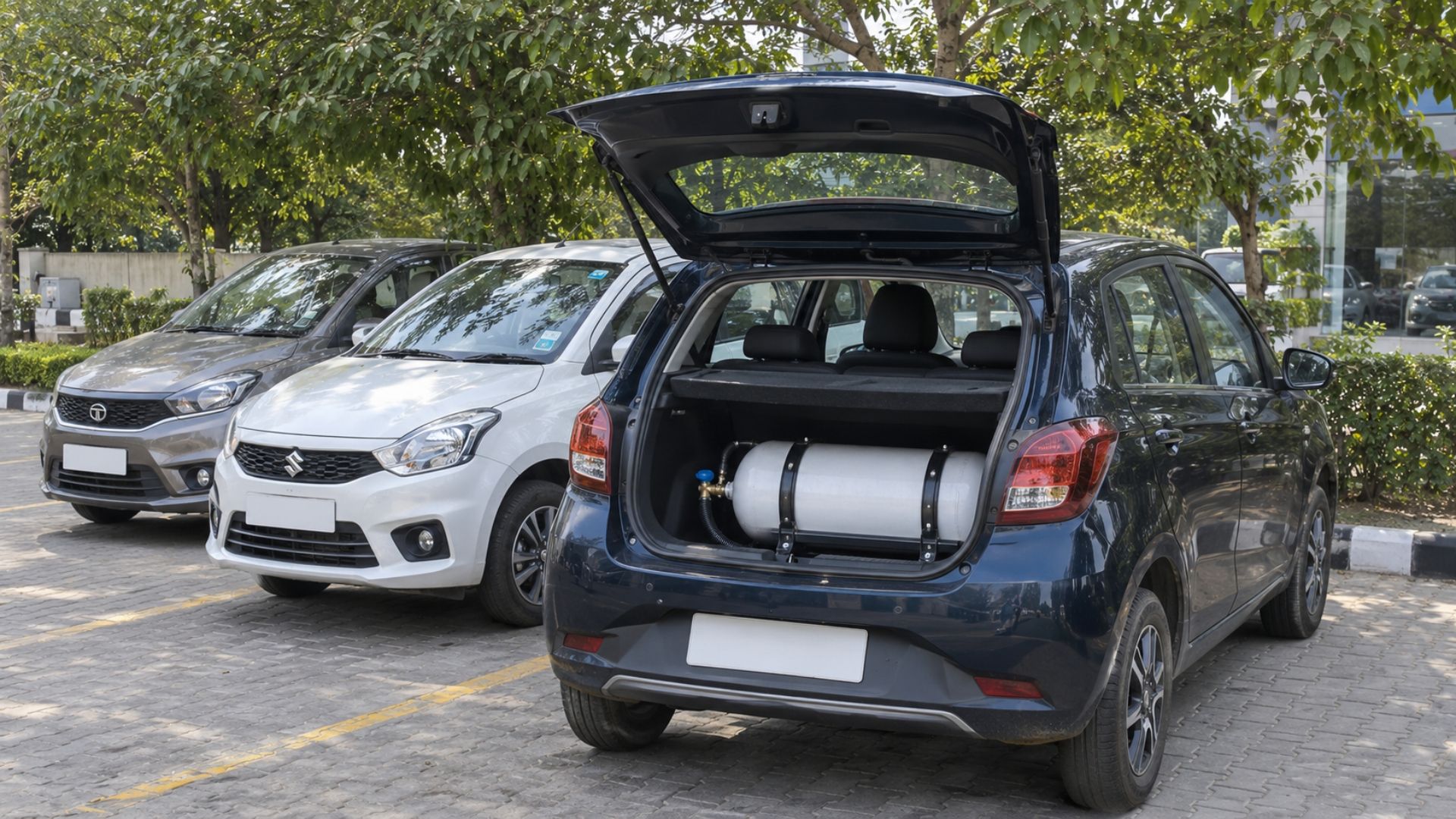

Fuel costs are rising, and the interest in cost-effective mobility is growing, driving the popularity of CNG cars in India, making them a fast-growing option for daily commuters and family car buyers. They provide an attractive balance of fuel efficiency, lower running costs, and lower tailpipe emissions compared with conventional petrol vehicles.
But the mileage numbers advertized aren’t always what you get in the real world. Factors such as traffic congestion, air conditioning, passenger loads, and driving habits can all impact actual fuel efficiency. So, what kind of mileage can you actually expect from a CNG car in 2026, and what should you keep in mind before buying one?
Let's explore real-world mileage, running costs, and some of the most practical CNG options available in the Indian market.
Quick Summary
- CNG cars generally offer better fuel economy in terms of running cost per kilometre than comparable petrol models.
- Real-world mileage depends on traffic, driving style, vehicle condition, and air-conditioning usage.
- Hatchbacks and compact sedans are popular choices for economical everyday travel.
- Regular servicing and a properly maintained CNG system help preserve fuel efficiency.
- Buyers should compare usable boot space, safety features, refuelling access, and overall practicality.
Why Are CNG Cars in India Gaining Popularity in 2026?
CNG vehicles are attractive to buyers who travel a lot and want to have control over their daily transportation costs.
Unlike petrol-only vehicles, factory-fitted CNG vehicles run on compressed natural gas. Most of them also have a dual-fuel system, which allows drivers to switch between petrol and CNG at will.
Here are some reasons behind their popularity:
1. Lower Everyday Running Expenses
CNG can offer a lower cost per kilometre than petrol, depending on local fuel rates and actual mileage. This makes it particularly useful for office commuters, taxi operators, and families with high monthly driving requirements.
2. Improved Fuel Efficiency
Several modern CNG models are designed to deliver impressive mileage without compromising everyday usability. Their efficiency makes them suitable for regular city journeys.
3. Reduced Tailpipe Emissions
CNG generally produces lower particulate emissions than petrol and diesel. However, its overall environmental impact also depends on methane leakage and the fuel supply chain.
4. Flexible Fuel Options
Many factory-fitted CNG cars retain a petrol tank, providing additional flexibility when CNG stations are unavailable.
Real-World Mileage: What Can You Expect?
One of the biggest considerations when buying a CNG vehicle is its actual mileage.
Manufacturers publish certified fuel-efficiency figures based on standard test conditions. Actual real-world driving experience may vary due to traffic signals, frequent braking, road conditions, and changing passenger loads.
This is a good indicative real-world range for most popular CNG hatchbacks and compact cars; in the region of 20-28 km/kg. Results may fall outside this range depending on the model and operating conditions.
Factors That Affect CNG Cars' Mileage
- Traffic conditions: Stop-start city traffic can reduce efficiency.
- Driving style: Sudden acceleration and harsh braking increase fuel consumption.
- Air conditioning: Continuous AC usage can affect overall efficiency.
- Tyre pressure: Underinflated tyres create additional rolling resistance.
- Vehicle maintenance: Dirty air filters, worn spark plugs, and neglected servicing can affect performance.
- Passenger load: Carrying additional weight may reduce mileage.
For a realistic assessment, check owner-reported mileage for your preferred model rather than relying entirely on advertised figures.
Best CNG Cars in India to Consider in 2026
The Indian market offers several factory-fitted CNG options across hatchback, sedan, and SUV categories.
Some popular models worth comparing include:
1. Maruti Suzuki Wagon R CNG
The Wagon R CNG is a practical choice for urban commuters. Its compact dimensions, spacious cabin, and easy-to-drive nature make it suitable for everyday family use.
2. Maruti Suzuki Swift CNG
The Swift CNG combines a familiar hatchback design with the convenience of factory-fitted CNG technology. It is worth considering for buyers who want a comfortable daily commuter.
3. Tata Tiago iCNG
The Tiago iCNG offers a compact design, useful features, and a practical cabin. Its twin-cylinder technology also helps improve luggage-space usability.
4. Maruti Suzuki Dzire CNG
For buyers who prefer a sedan, the Dzire CNG offers a comfortable cabin and a practical everyday driving experience.
5. Tata Punch iCNG
The Punch iCNG is an option for buyers who want an SUV-inspired design, higher seating position, and the convenience of CNG.
Practical Comparison of Popular CNG Cars
The following table provides a quick overview of popular models. Mileage figures are indicative manufacturer-claimed figures and can vary by variant and testing conditions.
Figures are indicative and should be verified against the latest specifications for the selected variant.
How to Calculate the Running Cost of a CNG Car?
Understanding fuel efficiency is easier when you calculate the cost per kilometre.
Use this simple formula:
Running Cost per Kilometre = CNG Price per Kg ÷ Actual Mileage (km/kg)
For example, if your vehicle delivers 25 km/kg, divide your local CNG rate by 25 to estimate the fuel expense for each kilometre.
You can also estimate monthly consumption by considering your average daily driving distance.
This calculation helps you understand whether switching to CNG makes sense for your travel requirements without relying on advertised mileage alone.
Also read: Top Mileage Cars in India 2026: Petrol, Diesel & CNG Options
What Should You Check Before Buying a New CNG Car?
Before selecting from the available new CNG cars, consider these practical points:
- Boot space: Check whether the CNG cylinder affects luggage capacity.
- Safety features: Compare airbags, electronic stability control, and crash-test information where available.
- Service network: Choose a manufacturer with accessible authorised service centres.
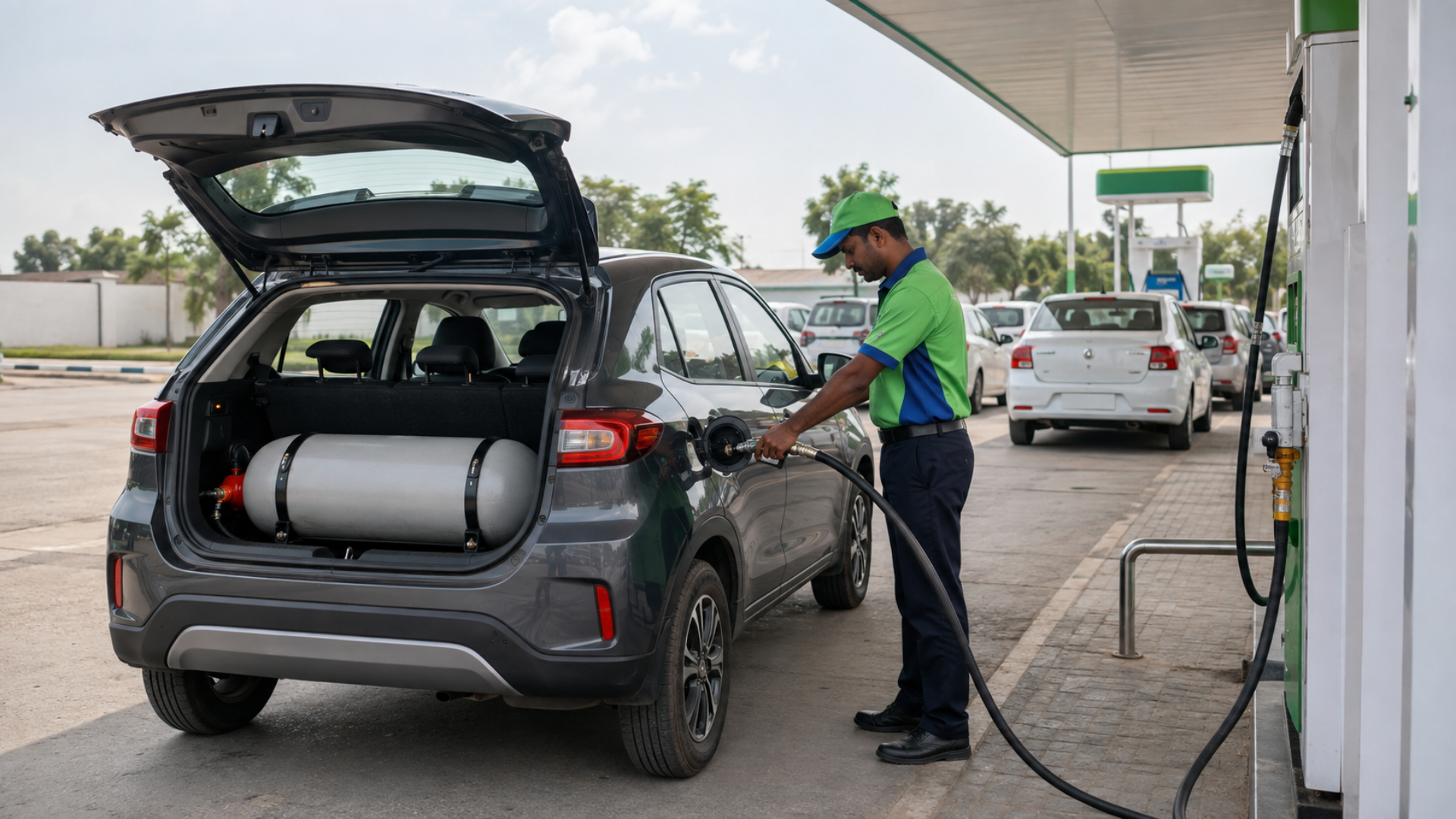
- CNG availability: Check the availability of refuelling stations around your home and workplace.
- Driving requirements: Consider whether you primarily drive in cities or regularly travel on highways.
- Warranty: Understand the warranty coverage for CNG components and the vehicle.
Factory-fitted CNG systems are generally preferable to aftermarket conversions because they are developed and tested for the specific vehicle.
Are Affordable CNG Cars in India Worth Buying?
Yes, particularly for people who drive regularly and want to reduce their everyday fuel expenses.
However, the decision of choosing between petrol and CNG should not be based on mere mileage figures. Consider how many miles you drive in a year, how many CNG stations are nearby, how much stuff you need to carry, and what kind of vehicle you want.
The benefits may not be as obvious for occasional drivers. Regular commuters, however, may find CNG a convenient long-term solution.
AutoRaftar allows you to view new cars by fuel type, compare available models, and list vehicles that meet your needs.
Conclusion
Choosing the right CNG cars in India in 2026 requires understanding real-world mileage, everyday usability, and long-term maintenance requirements. Models like Wagon R, Swift, Tiago, Dzire, and Punch are an interesting balance of comfort, practicality, and fuel efficiency.
Compare the mileage the manufacturer claims to what owners are reporting. Check local availability of CNG. And consider how much you drive each day before you decide.
Compare CNG cars on Autoraftar and get to know the specifications, features, and available options before choosing your next car.
FAQs on CNG Cars in India
1. Which are the best CNG cars in India in 2026?
Popular options include the Maruti Suzuki Wagon R CNG, Swift CNG, Dzire CNG, Tata Tiago iCNG and Tata Punch iCNG. The best choice depends on your space, comfort, and driving requirements.
2. What is the average real-world mileage of CNG cars in India?
Many popular CNG hatchbacks and compact cars deliver approximately 20–28 km/kg in real-world conditions. Actual mileage varies depending on the model, traffic, and driving habits.
3. Are CNG cars cheaper to run than petrol cars?
Generally, yes. CNG often costs less per kilometre than petrol, although the actual savings depend on local fuel rates, mileage, and maintenance expenses.
4. Do CNG cars require more maintenance?
CNG cars require regular servicing and periodic inspection of their fuel systems. Following the manufacturer's maintenance schedule helps maintain performance and safety.